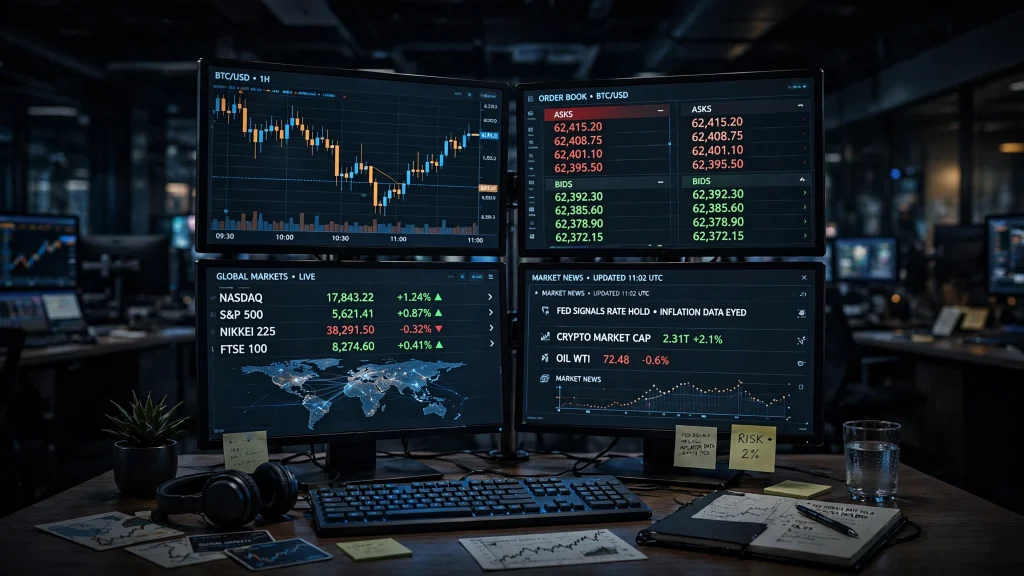
Trading futures can be an exciting and potentially lucrative endeavor, but it requires a solid understanding of financial markets, strict risk management, and a well-defined strategy. Whether you are looking to hedge against price movements or speculate on the future value of an asset, the futures market offers vast opportunities. This guide will walk you through the essential concepts and steps you need to know to start trading futures effectively.
What Are Futures Contracts?
A futures contract is a standardized legal agreement to buy or sell a specific asset at a predetermined price at a specified time in the future. These assets can range from traditional commodities like crude oil, gold, and wheat to financial instruments like stock indices (e.g., S&P 500) and cryptocurrencies.
Unlike options, which give you the right to buy or sell an asset, futures obligate the buyer to purchase the underlying asset and the seller to sell it upon the contract's expiration. However, most traders do not hold contracts to expiration; they close their positions beforehand to realize a profit or loss based on price changes.

Key Concepts in Futures Trading
Before diving into the mechanics of placing a trade, you must grasp a few critical concepts unique to the futures market:
1. Leverage and Margin
Futures are highly leveraged instruments. You only need to put up a fraction of the contract's total value (known as the initial margin) to control a large amount of the asset. While leverage can amplify your gains, it can also magnify your losses, making risk management paramount.
2. Contract Specifications
Every futures contract is standardized by the exchange (such as the Chicago Mercantile Exchange, or CME). This standardization includes the contract size, the minimum price fluctuation (tick size), the tick value, and the trading hours.
3. Expiration and Rollover
Futures contracts have specific expiration dates. If you wish to maintain a position beyond a contract's expiration, you must "roll over" the contract by closing the expiring one and opening a new one in a further-out month.
Futures vs. Stocks: A Quick Comparison
Understanding how futures differ from traditional stock trading can help frame your approach:
| Feature | Futures Trading | Stock Trading |
|---|---|---|
| Asset Ownership | Obligation to buy/sell (no ownership until expiration) | Actual ownership of company shares |
| Leverage | Very high (often 10:1 or more) | Typically moderate (up to 2:1 on margin) |
| Market Hours | Nearly 24 hours a day, 6 days a week | Standard exchange hours (e.g., 9:30 AM – 4:00 PM EST) |
| Short Selling | Easy and straightforward; no borrowing required | Requires borrowing shares; subject to restrictions |
| Lifespan | Finite (contracts expire) | Perpetual (hold shares indefinitely) |
Step-by-Step Guide to Trading Futures
Step 1: Educate Yourself and Choose a Market
Begin by thoroughly educating yourself on macroeconomic indicators, technical analysis, and the specific factors that influence your chosen market. If you are interested in agricultural commodities, weather reports will be crucial. If you trade equity index futures, you need to monitor interest rates, corporate earnings, and economic data releases.
Step 2: Open a Futures Brokerage Account
Not all stock brokers offer futures trading. You need to select a broker that provides access to futures exchanges, competitive commission rates, reliable trading platforms, and comprehensive charting tools. Be prepared to fill out applications detailing your trading experience and financial standing, as brokers must ensure you can handle the risks of leveraged trading.
Step 3: Develop a Trading Plan
A trading plan is your roadmap. It should outline your specific entry and exit criteria, your risk tolerance per trade (e.g., never risking more than 1-2% of your account capital on a single setup), and your overarching financial goals. Sticking to this plan helps remove dangerous emotional decision-making from the equation.
Step 4: Practice in a Simulator
Before risking real capital, spend significant time trading in a simulated environment (often called "paper trading"). This allows you to test your strategies in real-time market conditions, get comfortable with the broker's platform execution, and understand how quickly prices can move.
Step 5: Start Small and Manage Risk
When you transition to live trading, start with Micro E-mini contracts if possible. These are smaller fractions of standard contracts, allowing you to trade with less capital and lower risk. Always use stop-loss orders to automatically exit a losing trade before it depletes your account.
Conclusion
Trading futures is not for the faint of heart. It demands discipline, continuous education, and a robust framework for managing risk. By taking the time to understand contract specifications, respecting the power of leverage, and adhering strictly to a tested trading plan, you can navigate the futures market with confidence and work toward consistent profitability.