Trading futures contracts offers a dynamic way to participate in the global financial markets. Whether you are a beginner looking to understand the fundamentals of market speculation, or an advanced participant employing complex hedging strategies, the futures market provides unparalleled liquidity and leverage. This comprehensive guide will walk you through the essential mechanics, strategies, and risk management principles necessary for navigating futures contracts effectively.
Understanding Futures Contracts
A futures contract is a standardized legal agreement to buy or sell a specific asset at a predetermined price at a specified time in the future. Unlike options, where the buyer has the right but not the obligation to execute the trade, a futures contract obligates both the buyer and the seller to fulfill the terms of the agreement upon expiration, unless the position is closed beforehand.
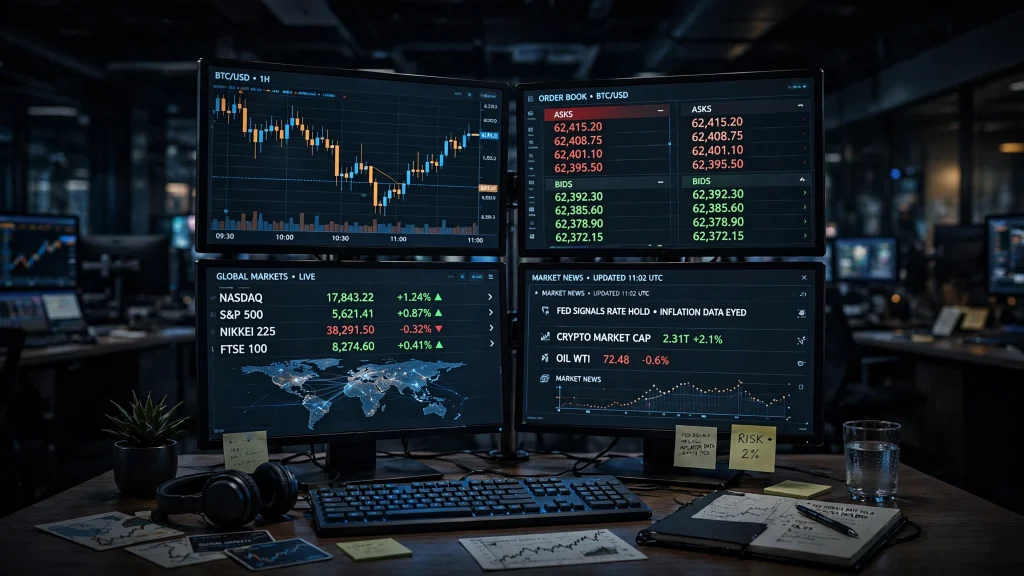
Historically rooted in agricultural commodities, modern futures markets encompass a vast array of assets, including equity indices (like the S&P 500), interest rates, energy products (crude oil, natural gas), precious metals, and even cryptocurrencies. This diversity allows traders to gain exposure to almost any sector of the global economy without needing to take physical delivery of the underlying asset in most cases.
Key Mechanics: Leverage and Margin
One of the most attractive—and dangerous—aspects of futures trading is leverage. In traditional stock trading, buying $10,000 worth of shares typically requires $10,000 in capital (or $5,000 if using standard margin). In futures trading, controlling a contract worth $100,000 might only require an initial margin deposit of $5,000 to $10,000.
This high degree of leverage means that small price movements in the underlying asset can result in massive percentage returns on your initial capital. However, it also means that losses can accumulate just as rapidly, potentially exceeding your initial margin deposit. Understanding the difference between Initial Margin (the capital required to open a position) and Maintenance Margin (the minimum capital required to keep the position open) is crucial for survival.
Futures vs. Traditional Stocks
For beginners transitioning from traditional equity markets, understanding the structural differences is vital. Below is a comparison table highlighting the primary distinctions between trading stocks and trading futures.
| Feature | Stocks | Futures Contracts |
|---|---|---|
| Asset Ownership | Represents partial ownership in a company. | A derivative contract; no ownership of the underlying asset until expiration/delivery. |
| Leverage | Generally 2:1 for intraday trading. | Highly leveraged, often 10:1 or more depending on the contract and exchange. |
| Market Hours | Standard market hours with limited pre/post-market. | Nearly 24 hours a day, 5-6 days a week, offering high liquidity. |
| Short Selling | Requires borrowing shares, subject to restrictions (uptick rule). | Going short is as straightforward as going long, with no borrowing required. |
| Expiration | Shares can be held indefinitely. | Contracts have strict expiration dates and must be rolled over or settled. |
Strategies for Beginners
For novice traders, the primary goal should be capital preservation and education. Beginners should start by trading micro or mini contracts. For example, instead of trading the standard E-mini S&P 500 (ES), beginners can trade the Micro E-mini (MES), which is one-tenth the size. This significantly reduces the financial risk per tick.
1. Trend Following: Identifying the broader market trend on higher timeframes (like daily or 4-hour charts) and executing trades in the direction of that trend. 2. Paper Trading: Utilizing a simulated trading environment to test strategies and get comfortable with the fast-paced nature of order execution without risking real capital. 3. Strict Stop Losses: Always entering the market with a predefined exit strategy to prevent a single bad trade from wiping out an entire account.
Advanced Strategies: Hedging and Spread Trading
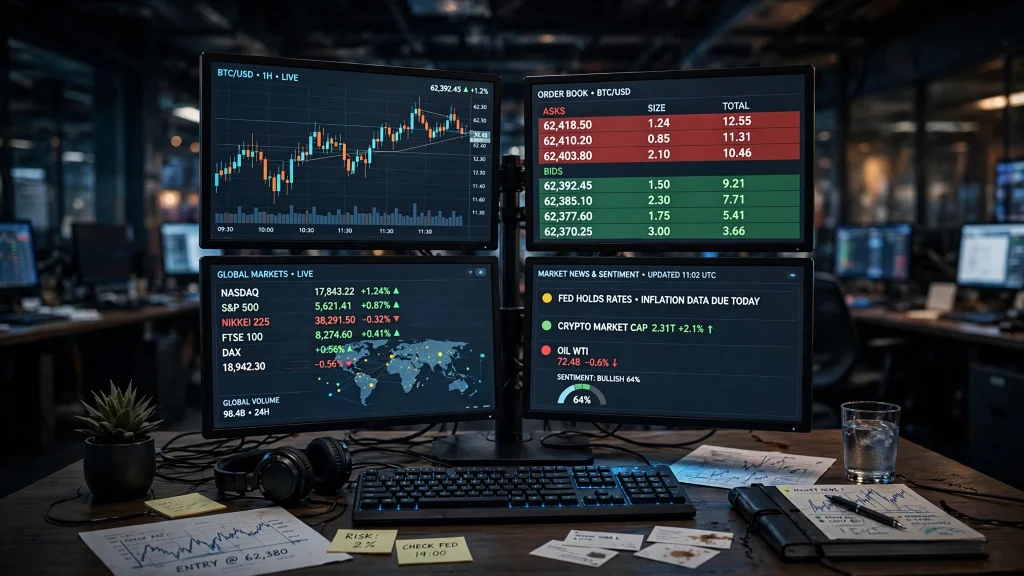
Advanced market participants use futures not just for outright speculation, but for portfolio protection and arbitrage.
Hedging: Institutional investors and advanced traders use futures to hedge against adverse price movements in their primary portfolios. For instance, an equity portfolio manager expecting a short-term market downturn might short S&P 500 futures. If the market drops, the profits from the short futures position will offset the losses in the equity portfolio.
Spread Trading: This involves simultaneously buying and selling related futures contracts to capitalize on the price difference (the spread) between them, rather than the absolute direction of the market. Examples include calendar spreads (buying and selling the same asset with different expiration months) or inter-commodity spreads (going long crude oil while shorting gasoline). Spread trading generally carries lower volatility and margin requirements compared to outright directional trading.
Risk Management: The Key to Longevity
Regardless of your experience level, risk management remains the cornerstone of successful futures trading. Never risk more than 1-2% of your total trading capital on a single trade. Because of the daily mark-to-market settlement process, falling below your maintenance margin will trigger a margin call, forcing the liquidation of your position at the worst possible time.
Trading futures is a rigorous intellectual pursuit that demands discipline, continuous market analysis, and a robust trading plan. By respecting the leverage and starting small, you can harness the power of the futures market to achieve your financial objectives.